From Baghdad to the Casino Floor: A Short History of Probability
Every casino depends on the mathematics of chance. That mathematics has roots in the algebra and statistics of Abbasid Baghdad and grew up around the gaming tables of Europe.
A casino is a business built on arithmetic. Roulette, craps and blackjack are designed so that, over many bets, the house takes a small, predictable share. The ideas that make such precise calculation possible developed over many centuries, and some of the earliest steps were taken in Baghdad.
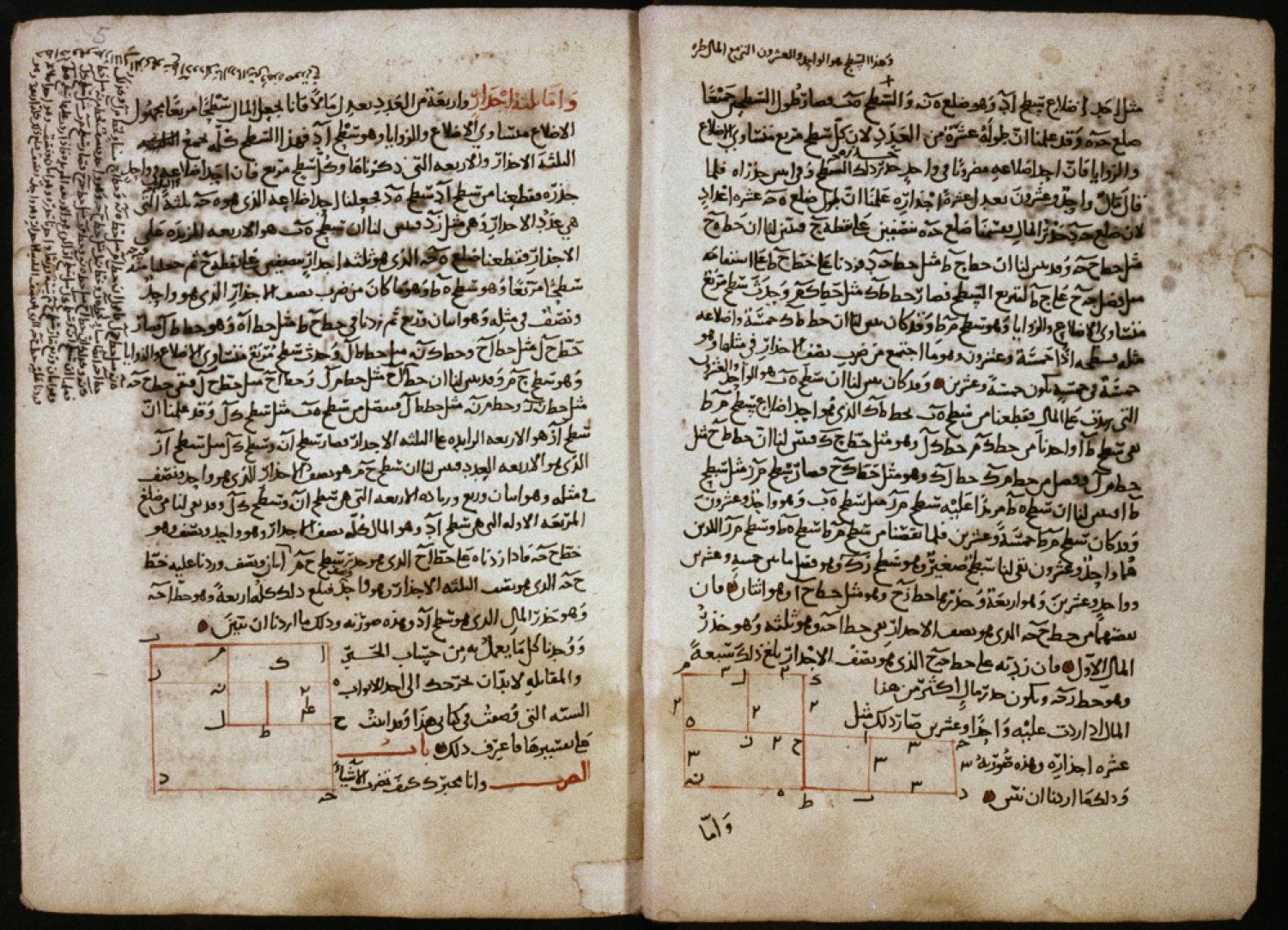
Algebra in Abbasid Baghdad
In the early ninth century Muhammad ibn Musa al-Khwarizmi, a scholar associated with the court of the caliph al-Ma'mun, wrote a book on calculation by completion and balancing. The Arabic word al-jabr in its title became our "algebra", and the Latin form of his name gave us "algorithm". His work on solving equations and on the Indian decimal place-value system, later passed to Europe, made systematic calculation far easier. Probability theory would have been almost unthinkable without it.
Al-Kindi and counting letters
Another Baghdad scholar, al-Kindi, wrote in the ninth century a treatise on deciphering coded messages. He explained that every language uses its letters with typical frequencies, so counting how often symbols appear in a secret text can reveal what they stand for. Historians of science often describe this frequency analysis as the earliest known use of statistical reasoning. Later scholars in the Arabic tradition, such as Ibn Adlan in the thirteenth century, even discussed how long a sample of text must be for the method to work.
Questions from the gaming table
The next leap came from Europe's gaming tables. In the sixteenth century the Italian physician Gerolamo Cardano, a lifelong player of dice and cards, wrote a book on games of chance, published only long after his death, which worked out the chances of various dice throws. In 1654 a French writer's puzzle about how to divide the stakes of an unfinished game prompted a famous exchange of letters between Blaise Pascal and Pierre de Fermat, often taken as the birth of probability theory. A few years later Christiaan Huygens wrote the first published textbook on the subject.
The house edge, explained
| Game | Why the house wins | Typical house edge |
|---|---|---|
| European roulette | 37 pockets, paid as if 36 | about 2.7% |
| American roulette | 38 pockets, paid as if 36 | about 5.3% |
| Craps (pass line) | rules slightly favour the house | about 1.4% |
| Slot machines | set by the programmed payout | varies widely |
Take European roulette. A bet on a single number pays 35 to 1, but there are 37 pockets including the zero. Over 37 spins, a player betting one unit each time would expect to win once (collecting 36 units including the stake) and lose 37 units in total, a loss of one unit, or about 2.7%. That small gap, repeated millions of times, pays for the chandeliers.
The same mathematics everywhere
Today the same probability theory is used in insurance, medicine, weather forecasting and, of course, by casinos, sportsbooks and poker players. Its story runs from the scholars of Abbasid Baghdad, whose work is described in our article on the House of Wisdom, to every blackjack table in Las Vegas.