Erbil Citadel: A City on a Hill of Its Own History
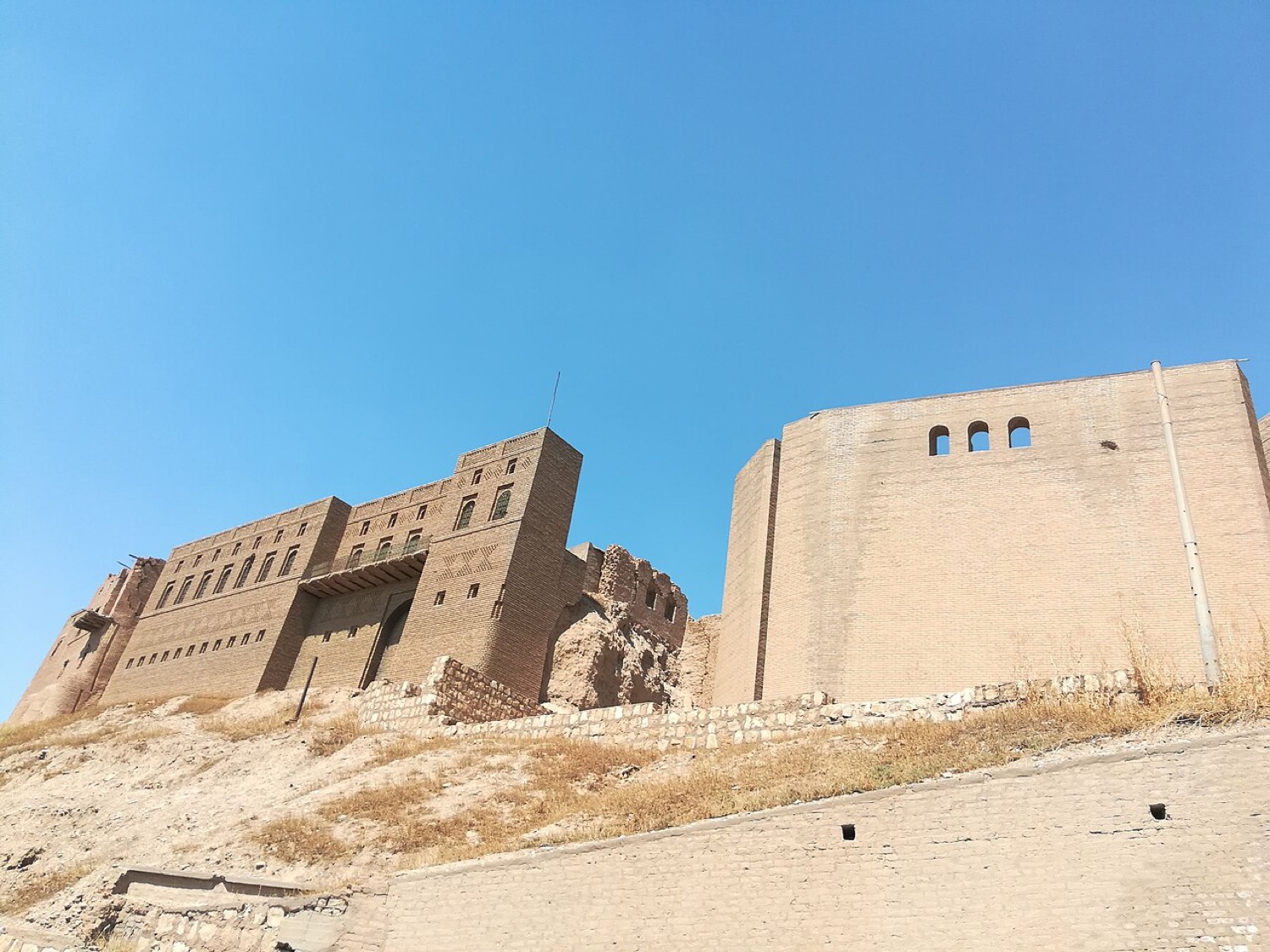
The Citadel of Erbil sits on an artificial mound built up by thousands of years of settlement. A guide to its history, restoration and the bazaar below.
From almost anywhere in central Erbil you can see it: a steep, oval mound crowned by a continuous ring of house facades, rising high above the streets around it. The Citadel is not a natural hill. It is a tell, a mound formed by layer upon layer of earlier settlements, each built on the ruins of the last. Erbil, known in antiquity as Arbela, is often described as one of the oldest continuously inhabited places in the world, and the Citadel is the visible proof of that long history.
Thousands of years in layers
Excavations and surveys suggest that people have lived on the site for many thousands of years. Arbela appears in Assyrian texts as an important religious centre with a temple of the goddess Ishtar. In 331 BC Alexander the Great defeated the Persian king Darius III at the Battle of Gaugamela, fought not far away, and Arbela is often named in accounts of the campaign. Later the town passed through Parthian, Sasanian, Islamic, Mongol and Ottoman hands, each period adding to the mound.
The houses on the rim
The surviving buildings on top are mostly from the eighteenth to the twentieth centuries: courtyard houses of brick, a mosque, a hammam and narrow lanes that follow an older street pattern. The outer houses form a continuous wall, which gives the Citadel its fortress-like appearance. In 2006 most residents were relocated so that a major restoration programme could begin, and UNESCO added the Citadel to the World Heritage List in 2014.
What to see
- The main gate on the south side, reached by a ramp from the square below.
- The Kurdish Textile Museum, housed in a restored mansion, with rugs, kilims and woven bags from across Kurdistan.
- Restored courtyard houses, some open as small museums, cafés or craft shops.
- The view from the edge of the mound over the city and the plain beyond.
Below the walls
At the foot of the Citadel lies the Qaysari bazaar, a covered market selling spices, sweets, textiles, household goods and gold, and the large square with fountains where families gather in the evenings. A short distance away stands the Mudhafaria (or Choli) Minaret, a decorated brick minaret from the twelfth century, and the city's large Sami Abdulrahman Park offers shade and green space.
Practical notes
Erbil is the capital of the Kurdistan Region of Iraq and has an international airport with connections across the region and to Europe. The Citadel is best visited in the late afternoon, when the light softens and the square below fills up. Opening hours of individual buildings can change during restoration work, so check locally. Spring, when the surrounding plains turn green, is a particularly good time to visit, and Erbil makes a natural base for trips into the mountains of the north, such as the gorge at Rawanduz.