Baghdad's House of Wisdom and the Abbasid Golden Age
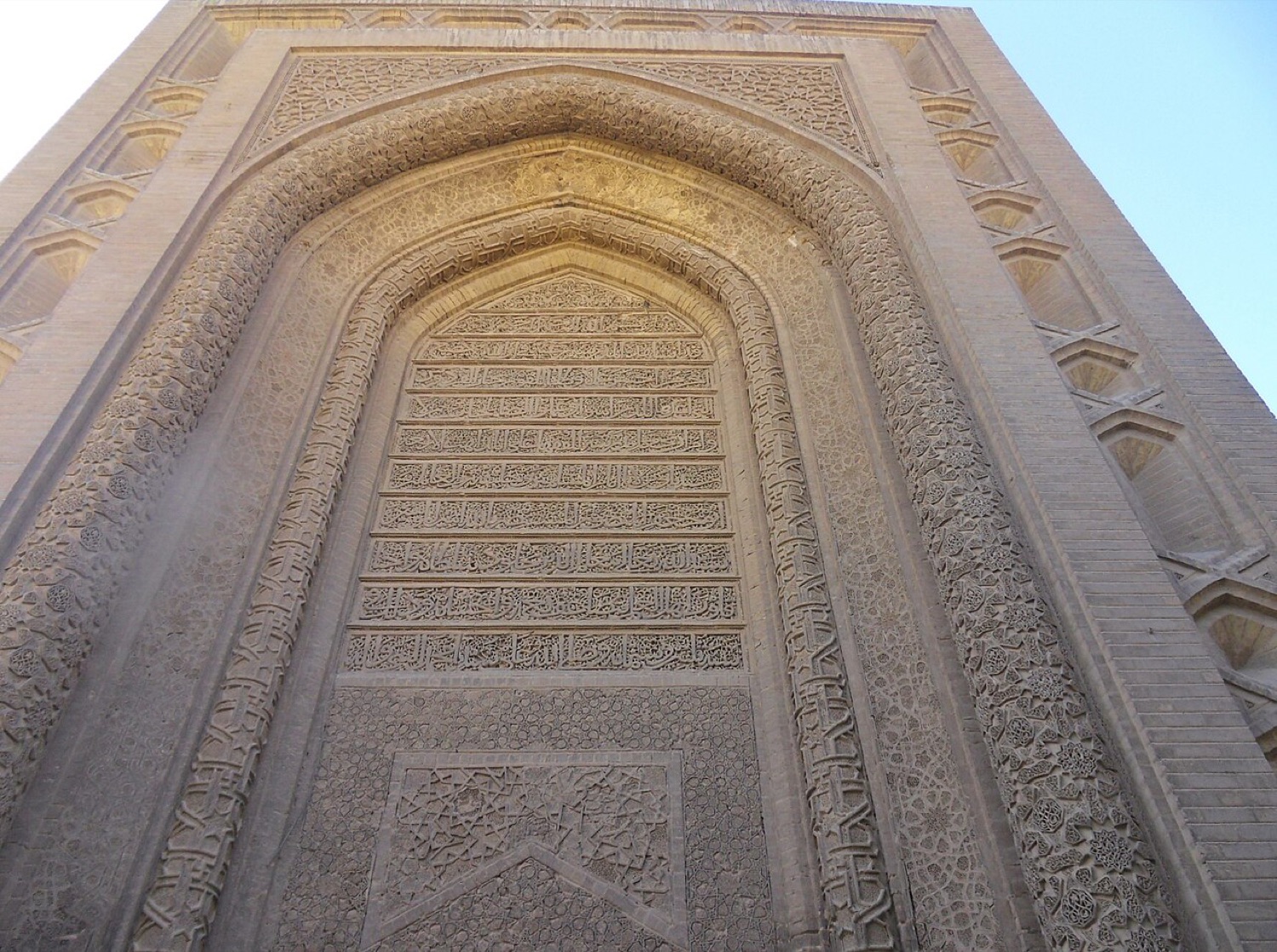
For several centuries Abbasid Baghdad was one of the great centres of learning in the world. What was the House of Wisdom, and what survives from that age?
Baghdad was founded in 762 by the Abbasid caliph al-Mansur, who chose a site on the Tigris where trade routes crossed and laid out a circular city with the palace and great mosque at its centre. Within a few generations the "Round City" had spilled far beyond its walls, and Baghdad became one of the largest cities of its time, a capital of commerce, government and scholarship.
What the House of Wisdom was
The Bayt al-Hikma, or House of Wisdom, is associated above all with the caliphs Harun al-Rashid and his son al-Ma'mun in the late eighth and early ninth centuries. Historians still debate exactly what it was. The older picture of a grand university is probably too modern; many scholars now describe it as a palace library and workshop for scholars and translators. Either way, Baghdad in this period hosted an extraordinary effort to collect, translate and extend the learning of earlier civilisations.
The translation movement
Works of Greek philosophy, medicine, astronomy and mathematics were translated into Arabic, often through Syriac, alongside texts from Persian and Sanskrit. Translators such as Hunayn ibn Ishaq, a Christian physician from al-Hira, produced careful versions of Galen and other authors and developed technical vocabulary that Arabic science used for centuries. Patrons were not only caliphs; wealthy families and officials also paid for translations and books.
Scholars of Baghdad
- Muhammad ibn Musa al-Khwarizmi wrote a treatise on calculation and equations in the early ninth century whose title gave us the word "algebra"; his own name gave us "algorithm".
- The Banu Musa, three brothers, wrote on geometry and on ingenious mechanical devices.
- Al-Kindi, often called the philosopher of the Arabs, wrote on philosophy, optics, music and the analysis of coded messages.
Paper and books
Papermaking spread to Baghdad in the late eighth century, and cheaper writing material helped create a lively book market of copyists, booksellers and private libraries. That tradition of reading and buying books is one reason why Baghdad's literary street, Al-Mutanabbi Street, still feels like an heir to the city's medieval reputation.
1258 and after
In 1258 a Mongol army under Hulagu took Baghdad. The city was sacked, the last Abbasid caliph in Baghdad was killed, and contemporary accounts describe libraries destroyed and books thrown into the Tigris. The exact scale of the losses is hard to measure, but the event marked the end of Baghdad as an imperial capital.
Very little Abbasid architecture survives in the modern city. The most important building is the Mustansiriya Madrasa on the east bank, founded by the caliph al-Mustansir and completed in the 1230s as a college teaching the four schools of Sunni law along with other subjects. Its brick courtyard and carved portals give a sense of the dignity of Abbasid learning, and it is one of the most rewarding stops in old Baghdad.