The Mesopotamian Marshes and Basra
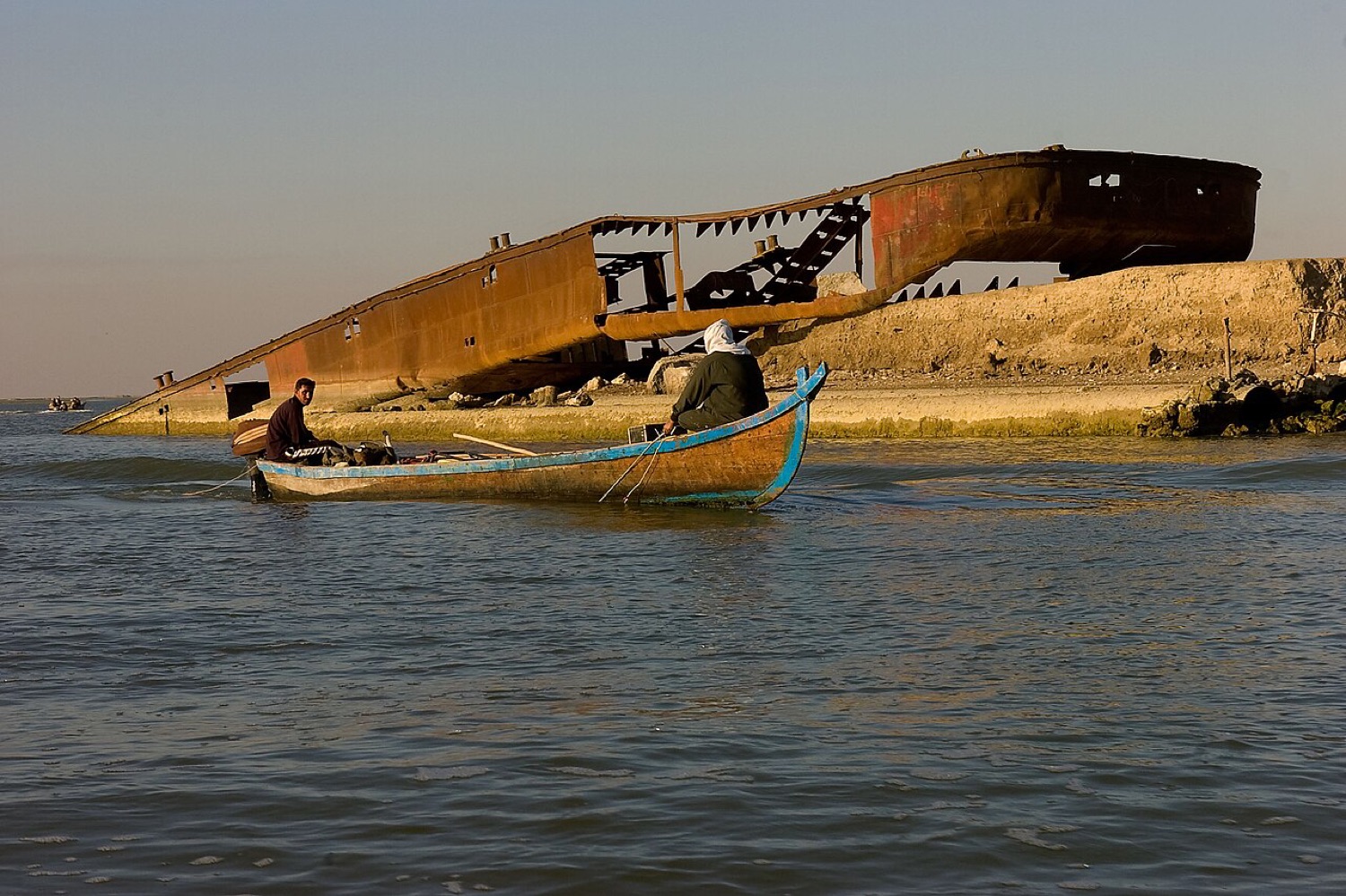
Where the Tigris and Euphrates meet, the marshes of southern Iraq are a world of reed islands, water buffalo and arched guesthouses. They are also fragile.
In the far south of Iraq the Tigris and Euphrates spread out into a vast network of wetlands, lakes and reed beds before joining at the Shatt al-Arab. These are the Mesopotamian Marshes, known in Arabic as the Ahwar. For thousands of years they have supported a distinctive way of life, and they are among the most important wetlands in the Middle East for birds and fish.
Life on the water
The people of the marshes, often called the Ma'dan or Marsh Arabs, have traditionally lived by fishing, rice growing, reed cutting and raising water buffalo. Houses were built on islands of packed reeds and mud, and people moved between them in narrow wooden boats called mashoof, poled or paddled through the channels. The most striking buildings are the mudhif, large guesthouses made entirely of bundled reeds bent into arches, with a long, vaulted interior. Their design closely resembles reed buildings shown on Sumerian seals and carvings, which suggests a continuity of several thousand years.
Drained and reflooded
In the 1990s the marshes were deliberately drained through a system of canals and embankments, and much of their area dried out. The environmental and human consequences were severe, and many inhabitants left. After 2003 local people broke embankments and water returned to parts of the former wetland. Recovery has been real but uneven: the marshes depend on river flows that are now reduced by upstream dams, irrigation and drought, and salinity and pollution are ongoing concerns.
World Heritage
In 2016 UNESCO inscribed "The Ahwar of Southern Iraq" on the World Heritage List, a mixed natural and cultural listing that covers three marsh areas together with the ancient cities of Uruk, Ur and Eridu. The pairing makes a point: the wetlands and the first cities of Mesopotamia belong to the same story.
Visiting the marshes
- The town of Chibayish in Dhi Qar province is the usual starting point; local guides offer boat trips through the channels.
- Early morning is best for birds and for cooler temperatures.
- Ask permission before photographing people, homes or a mudhif.
- Water levels vary a great deal by season and year, so ask locally what to expect.
Basra
Basra, Iraq's main port, sits on the Shatt al-Arab south of the marshes. Its riverside Corniche is a popular evening promenade, and the city's old quarter still has traditional houses with carved wooden balconies called shanasheel, some of which have been restored. Basra was historically surrounded by enormous date-palm groves, and the region's dates remain a source of local pride. Its port links with India and the Gulf also left their mark on the local kitchen, from spices to the mango pickle known as amba.