Mosul's Old City and the Return of al-Hadba
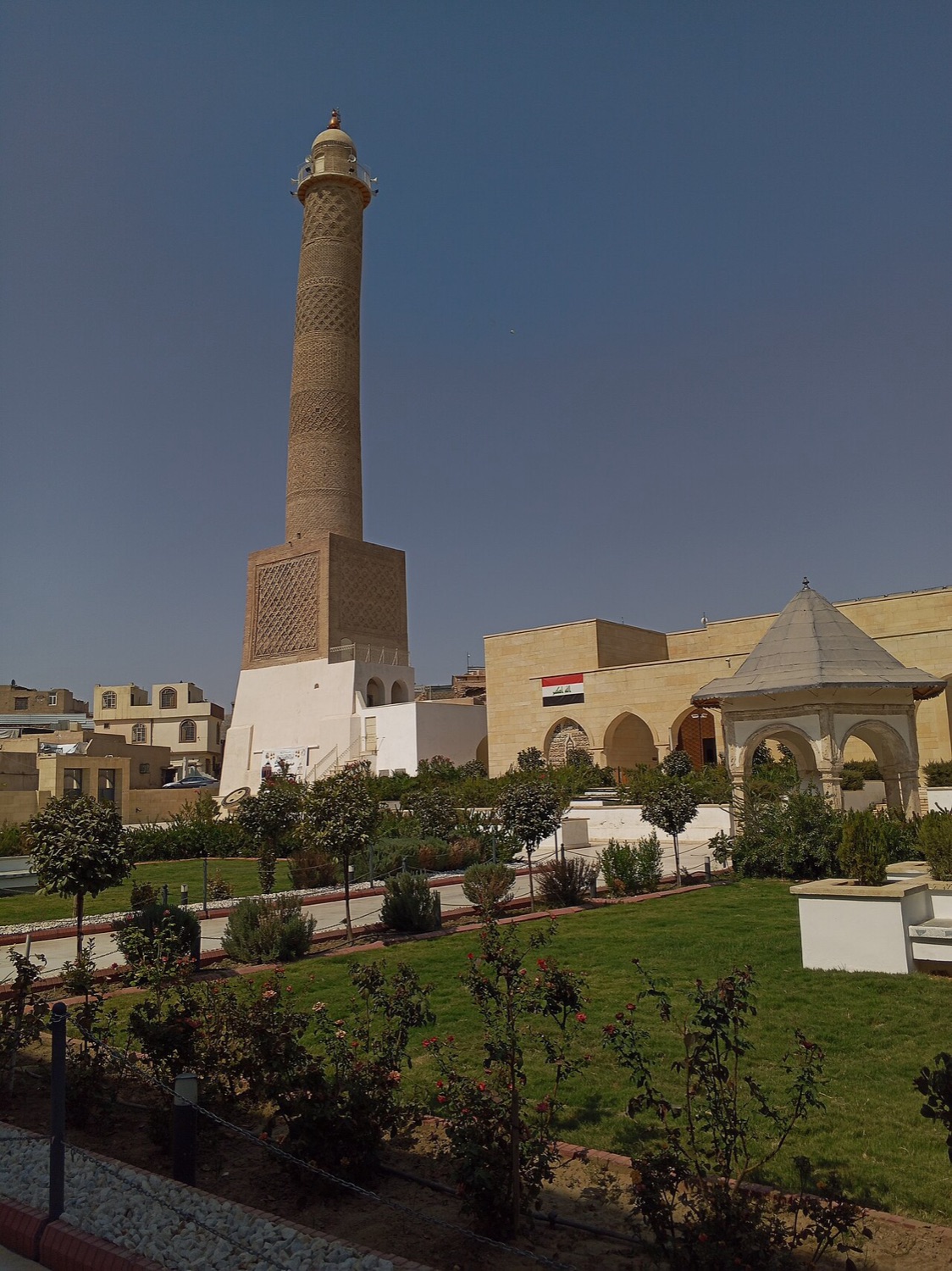
Mosul's old city on the Tigris lost many of its landmarks during the fighting of 2017. The reconstruction of the al-Nuri Mosque and its leaning minaret has become a symbol of recovery.
Mosul is Iraq's great northern city, set on the Tigris opposite the ruins of ancient Nineveh. For centuries it was a centre of trade between Mesopotamia, Anatolia and Syria, and its old city held mosques, churches, markets and stone houses that reflected a long history of religious and cultural diversity. The city's name is often linked with muslin, the fine cotton cloth that European traders associated with it.
Al-Hadba, "the hunchback"
The best-known landmark of the old city was the minaret of the al-Nuri Mosque, built in the 1170s under Nur al-Din Zangi. Over the centuries the brick tower developed a pronounced lean, which earned it the nickname al-Hadba, "the hunchback", and it appeared on banknotes and in countless photographs. In June 2017, during the battle to retake the city, the mosque and the minaret were destroyed, along with a large part of the old city around them. The human cost of those months was very great, and many families are still rebuilding their lives.
Revive the Spirit of Mosul
In 2018 UNESCO launched an initiative called Revive the Spirit of Mosul, with substantial funding from the United Arab Emirates and other partners. It set out to rebuild the al-Nuri Mosque and al-Hadba, two historic churches, al-Tahera and al-Saa'a (Our Lady of the Hour), and a number of traditional houses, while training local craftspeople in stone, marble and brick work. Engineers studied the original structure closely, and the rebuilt minaret was designed to reproduce its characteristic lean. The restored complex was completed in the mid-2020s.
Beyond the landmarks
Reconstruction in Mosul is not only about famous buildings. Schools, bridges, the university library, homes and shops have all needed repair, much of it carried out by residents themselves. The old city's narrow lanes, built of the local grey Mosul marble and gypsum, are slowly filling again with workshops and families.
Nineveh across the river
On the east bank lie the remains of Nineveh, capital of the Assyrian empire in the seventh century BC under kings such as Sennacherib and Ashurbanipal. Sections of its city walls and reconstructed gates can be seen, though several were damaged in recent years. The library of Ashurbanipal, whose clay tablets are largely in the British Museum, preserved many of the Mesopotamian texts known today, including much of the Epic of Gilgamesh.
Visiting
Mosul is reachable by road from Erbil in a couple of hours. As with any part of Iraq, check the latest official travel advice for your country before going, travel with a local guide where possible, and be sensitive when photographing in areas that suffered heavy damage. The rebuilt minaret leaning over the old city is a moving sight, and a reminder of how much effort recovery takes.