Babylon: Visiting Iraq's Most Famous Ancient City
Babylon is a name almost everyone knows. Here is what actually survives on the banks of the Euphrates, and why the site joined the World Heritage List in 2019.
Babylon lies on the Euphrates about 85 kilometres south of Baghdad, close to the modern city of Hillah. For long stretches of ancient history it was the largest and most prestigious city in Mesopotamia, and its name passed into the languages of the world as a byword for size, wealth and confusion. The real site is quieter than the legend, but it rewards a visit.
Two golden ages
Babylon first rose to prominence under Hammurabi, who ruled in the eighteenth century BC and is remembered for the law collection inscribed on a black stone stele now in the Louvre. The city we can walk through today, however, belongs mostly to a later age: the Neo-Babylonian empire of the seventh and sixth centuries BC, and above all to Nebuchadnezzar II, who reigned from about 605 to 562 BC.
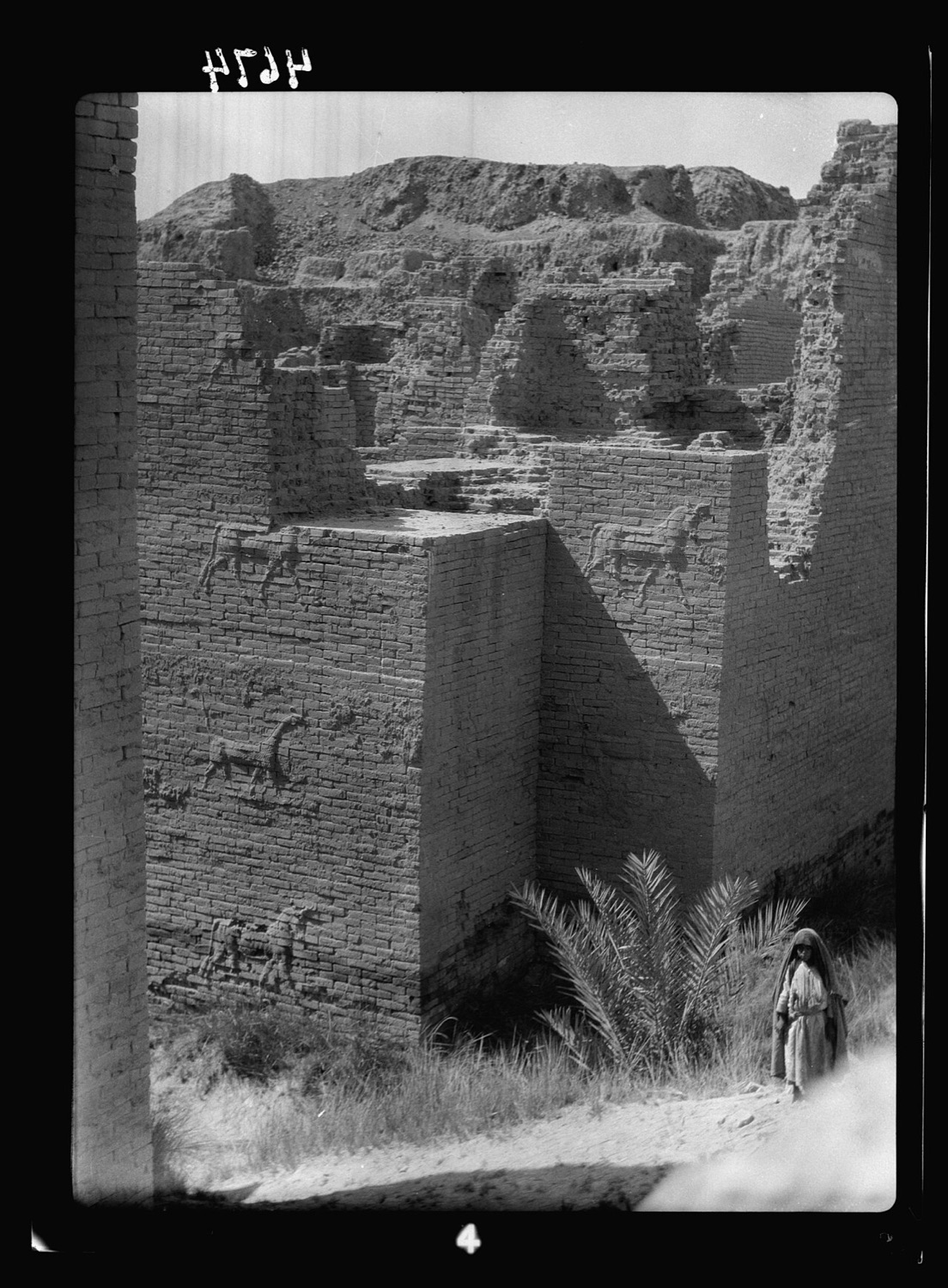
Nebuchadnezzar rebuilt the city on a grand scale. Its inner city was protected by double walls, crossed by a ceremonial Processional Way and entered through the Ishtar Gate, faced with glazed bricks showing dragons and bulls in relief. Many of his bricks were stamped with his name, and you can still find them in the walls of the site and in museum cases around the world.
The gate that went to Berlin
German archaeologists led by Robert Koldewey excavated Babylon between 1899 and 1917. Thousands of fragments of glazed brick were shipped to Berlin, where the front part of the Ishtar Gate and a section of the Processional Way were reconstructed in the Pergamon Museum. What remains at Babylon are the lower, unglazed parts of the gate, still decorated with moulded animals, plus a modern replica near the site entrance.
Modern layers
The site has had a complicated recent history. In the 1980s parts of the Southern Palace were rebuilt on top of the ancient remains, with new bricks bearing the name of the government of the day, an intervention that archaeologists widely criticised. After 2003 the area was used for a time as a military camp, which caused further damage that was later documented by heritage specialists. UNESCO inscribed Babylon on the World Heritage List in 2019, and conservation work has continued since, often with international partners.
Legends and evidence
- The Hanging Gardens. Classical writers described terraced gardens at Babylon, but no clear archaeological trace has been found, and some scholars argue the gardens may have been at Nineveh instead.
- The Tower of Babel. The biblical story is generally linked to Etemenanki, the great ziggurat of Babylon's god Marduk, of which only the outline of the base survives.
- Alexander the Great. Alexander died in Babylon in 323 BC, reportedly in the palace of Nebuchadnezzar.
Practical notes
Most visitors come on a day trip from Baghdad or stay in Hillah. A guide makes a real difference, because the significance of a low wall or a stretch of brick pavement is not obvious without context. Go early in the day outside the summer months, carry water, and allow time for the small site museum. If you are interested in the older Sumerian world that came before Babylon, the Ziggurat of Ur further south makes a natural companion visit.