The Ziggurat of Ur and the Royal Tombs
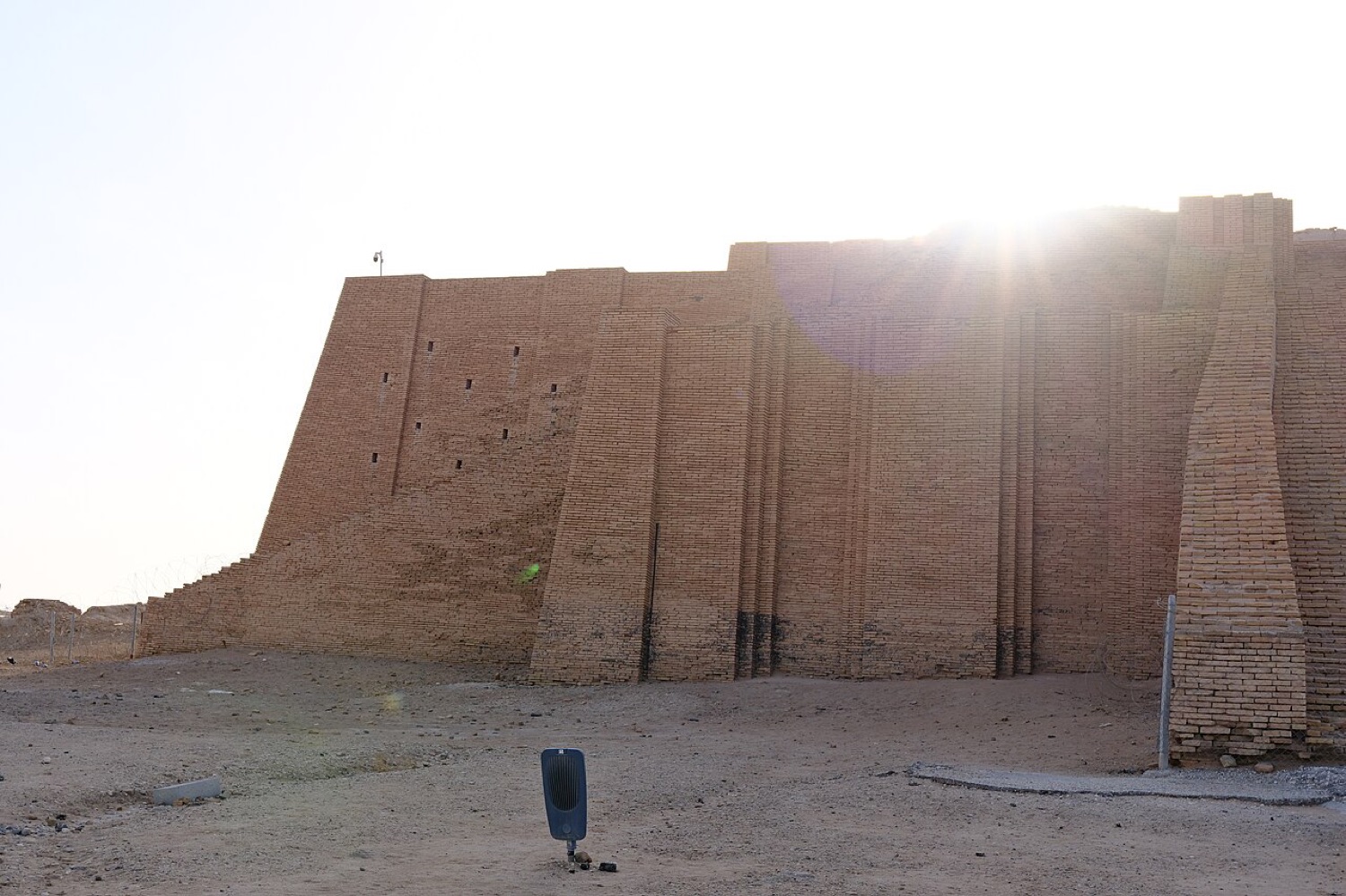
Rising out of the desert near Nasiriyah, the Ziggurat of Ur is the best-preserved temple tower of ancient Mesopotamia and the gateway to one of archaeology's great discoveries.
A ziggurat is a stepped temple platform built of mud brick, with a shrine on the summit. Almost every major Mesopotamian city had one, but most have eroded into shapeless mounds. The Ziggurat of Ur, about 15 kilometres south-west of Nasiriyah, is the exception: its massive lower stages still stand, and seen from a distance across the flat plain it looks almost architectural rather than archaeological.
Who built it
The ziggurat was built at the end of the third millennium BC by Ur-Nammu, founder of the so-called Third Dynasty of Ur, and completed by his son Shulgi. It was dedicated to Nanna, the moon god and patron of the city. Its core is sun-dried mud brick, wrapped in a thick skin of baked brick set in bitumen, with drainage channels to cope with the occasional heavy rain. Later kings repaired it, including the Neo-Babylonian ruler Nabonidus in the sixth century BC.
What you see today is partly a modern restoration. The facade and the great central staircase were reconstructed in the twentieth century, while the upper stages and the shrine on top have long since vanished.
Woolley and the Royal Cemetery
Ur was excavated between 1922 and 1934 by a joint British Museum and University of Pennsylvania expedition led by Leonard Woolley. His most famous find was the Royal Cemetery, a group of graves from around 2600 to 2400 BC that contained extraordinary objects: the gold and lapis headdress of a woman named Puabi, lyres decorated with bulls' heads, the inlaid box known as the Standard of Ur, and the game board now known as the Royal Game of Ur. The finds were divided among museums in Baghdad, London and Philadelphia.
Abraham's city?
Since the nineteenth century Ur has been associated with "Ur of the Chaldees", named in the Bible as the home of Abraham. The identification is a tradition rather than a proven fact, but it has given the site a special meaning for Jews, Christians and Muslims alike. In March 2021 Pope Francis held an interfaith gathering at Ur during the first papal visit to Iraq, which brought the site worldwide attention.
Visiting
- The site is usually reached by car from Nasiriyah. Check locally for opening arrangements, which can change.
- Climbing the restored staircase gives a wide view over the excavated city, including the remains of houses and temples.
- Spring and late autumn are the most comfortable seasons; summer temperatures in Dhi Qar are extreme.
- Combine the visit with the southern marshes, which lie within a couple of hours' drive.
Ur is part of the UNESCO World Heritage listing for the Ahwar of Southern Iraq, adopted in 2016, together with Uruk and Eridu. Standing at the top of the staircase, with the plain stretching out in every direction, it is easy to understand why ancient people built mountains for their gods in a land that had none.