Knucklebones and Dice in the Ancient Near East
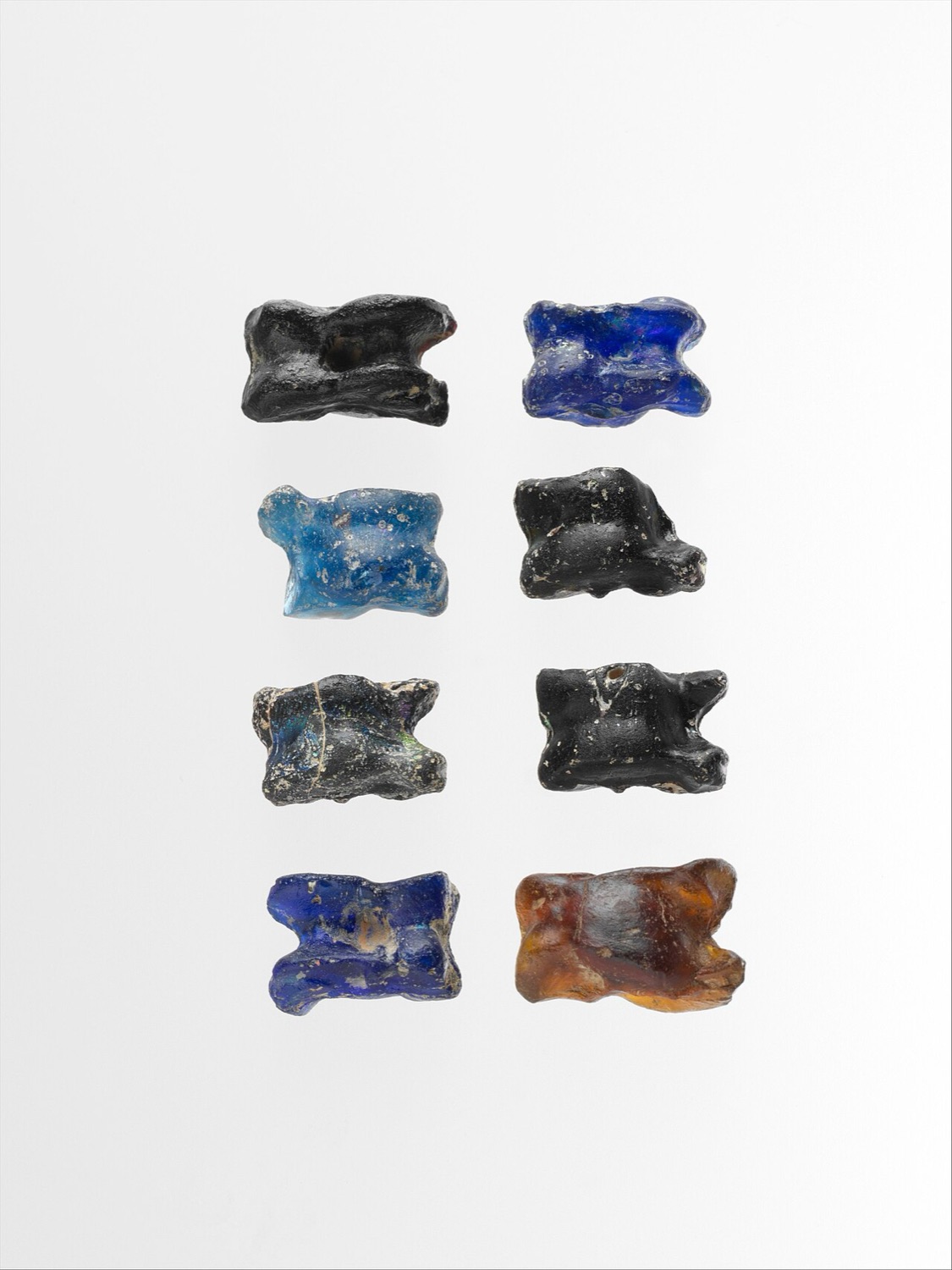
Long before cubic dice, people threw the ankle bones of sheep and goats to decide games, settle questions and place bets. The story of the first dice runs through the ancient Near East.
The oldest randomising devices were not made at all; they were found. The astragalus, a small, roughly rectangular ankle bone of sheep and goats, lands on one of four sides when thrown. Archaeologists find these knucklebones, often polished or marked, at sites across the ancient Near East and the Mediterranean, sometimes in large collections. They were used for children's games, for fortune-telling and for gambling, and they are the ancestors of every die rolled in a casino today.
Uneven odds
An astragalus is not a fair die. Its two broad sides come up far more often than its two narrow ones, so throws had very different probabilities. Ancient players did not have a theory of probability, but they knew from experience which throws were rare, and games usually rewarded those throws most. In the Greek and Roman world, throwing four knucklebones so that each showed a different face was called the "Venus" and was the best result in several games.
The first cubic dice
Cubic dice, with six faces marked by dots, appear in the third millennium BC in the region stretching from Mesopotamia to the Indus Valley. Early examples come from sites in eastern Iran and from Indus cities such as Mohenjo-daro. Some early dice do not follow the modern convention that opposite faces add up to seven; that standard took centuries to settle. In Mesopotamia itself, the tetrahedral dice of the Royal Game of Ur show another solution to the same problem: how to create a fair-enough random result.
Dice, gods and fate
In many ancient societies, throwing lots was a way of asking the gods to decide. Mesopotamian texts mention the casting of lots to divide inheritances or allocate duties, and the line between game, divination and decision-making was not always sharp. That connection between chance and fate lingers in our language: we still speak of fortune, lots and luck.
From the bazaar to the casino
Dice games spread with trade along every route that crossed the region. Medieval players in the Islamic world and Europe enjoyed a dice game called hazard, whose name is sometimes traced to the Arabic al-zahr, "the die", though the etymology is debated. Hazard is the ancestor of craps, the fast dice game of American casinos. Every time a shooter at a craps table throws two dice down the felt, they repeat a gesture that would have been familiar in a courtyard in Babylon.
Seeing ancient dice today
- The British Museum, the Louvre and the Metropolitan Museum of Art all hold astragali and early dice from the Near East and the Mediterranean.
- Look for knucklebones made of other materials, such as bronze, glass or stone, which show how popular the shape was.
- Museum labels often note whether objects were found in graves, a sign that games mattered enough to accompany the dead.